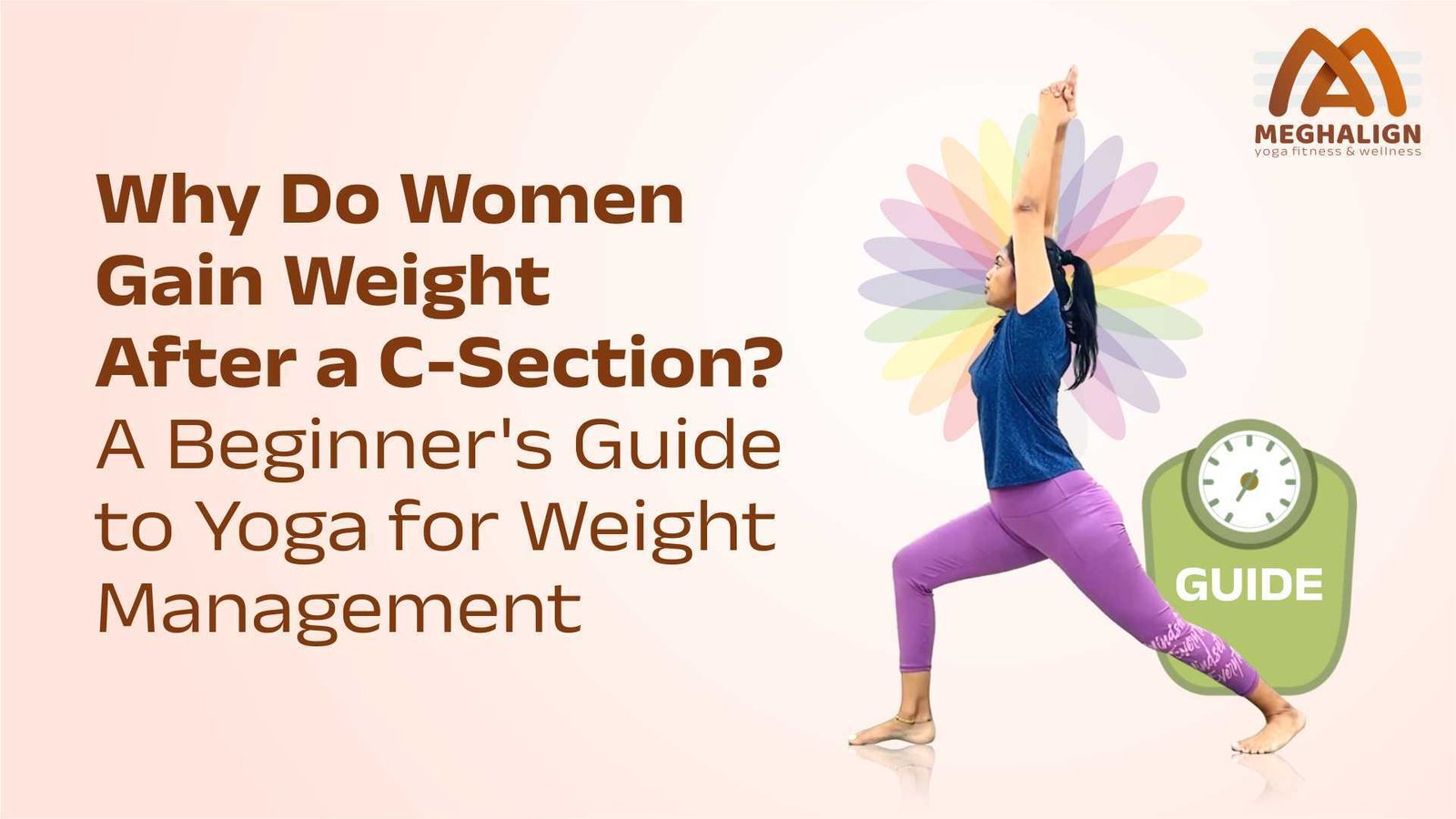
Why Do Women Gain Weight After a C-Section? A Beginner’s Guide to Yoga for Weight Management
Having a baby is a major physical and emotional change. After a C-section, many women notice that their body feels different from before pregnancy. Weight may remain around the abdomen, energy levels can change, and returning to exercise may feel difficult.
For some women, this can lead to frustration: “Why am I not losing my pregnancy weight?”
The answer is not simply a lack of exercise.
Pregnancy, childbirth, recovery, sleep changes, daily responsibilities and changes in activity can all affect postpartum weight. A C-section is major abdominal surgery, so returning to physical activity also needs to be gradual.
This is where yoga for weight management can become part of a sustainable postpartum wellness routine—once a woman has received appropriate medical clearance.
Why Can Women Gain or Retain Weight After a C-Section?
A C-section itself does not automatically cause permanent weight gain. However, several factors surrounding pregnancy and recovery can make postpartum weight management challenging.
1. Reduced Physical Activity During Recovery
A C-section involves an abdominal incision, and the body needs time to recover.
During the early recovery period, women may naturally reduce walking, exercise and other physical activities. This reduction in daily movement can contribute to changes in energy expenditure.
Trying to immediately return to pre-pregnancy workouts is generally not the answer. Recovery should come first.
2. Pregnancy Weight Does Not Disappear Immediately
During pregnancy, the body naturally gains weight to support the growing baby and pregnancy-related changes.
After delivery, some weight is lost relatively quickly, while other weight may take considerably longer to change.
Every woman’s postpartum journey is different.
Instead of focusing only on the number on the weighing scale, it can be more useful to consider strength, mobility, energy, sleep and overall well-being.
3. Sleep Disruption Can Make Weight Management Difficult
New mothers often experience interrupted sleep.
Caring for a newborn can make regular sleeping patterns difficult, and fatigue can affect food choices, motivation and daily activity.
This is one reason why postpartum weight management should not be approached simply as “eat less and exercise more.”
A realistic plan needs to consider the mother’s complete routine.
4. Postpartum Lifestyle Changes
Life after childbirth changes dramatically.
A new mother may have less time for:
- Regular exercise
- Meal preparation
- Walking
- Rest
- Personal wellness
- Consistent daily routines
The challenge is therefore not just losing weight. It is finding a healthy routine that fits into a completely different lifestyle.
Can Yoga Help With Postpartum Weight Management?
Yoga can be a useful part of a broader postpartum wellness routine.
However, it is important to understand what yoga can and cannot do.
Yoga can provide physical movement, mobility work, balance, breathing exercises, relaxation and mindfulness. A consistent practice may help women gradually become more active and reconnect with their bodies.
But yoga should not be promoted as a guaranteed method for rapid weight loss.
For postpartum women, weight management is better approached through a combination of appropriate physical activity, balanced nutrition, adequate recovery and sustainable lifestyle habits.
When Can You Start Yoga After a C-Section?
There is no universal date when every woman should begin yoga after a C-section.
The appropriate timeline depends on individual recovery, the delivery experience and any complications.
Before starting structured exercise, particularly abdominal exercises or more demanding yoga postures, women should speak with their doctor or appropriate healthcare professional and follow their individual postpartum guidance.
Once cleared, beginners can start with gentle movement and gradually progress.
The focus should initially be on rebuilding movement and confidence—not burning as many calories as possible.
Weight Loss Yoga for Beginners: Where Should You Start?
If you are completely new to yoga, don’t start with advanced poses simply because you want faster results.
Weight loss yoga for beginners should begin with movements appropriate to your current ability.
A beginner-friendly session may include:
- Gentle warm-up movements
- Basic standing postures
- Controlled breathing
- Mobility exercises
- Simple balance work
- Gentle stretching
- Relaxation
As your strength and confidence improve, your instructor can gradually introduce more challenging movements.
The goal is progression.
Female Weight Loss Yoga for Beginners: Why Individualisation Matters
Women’s bodies go through different stages and physical changes throughout life. After pregnancy and a C-section, individualisation becomes particularly important.
Female weight loss yoga for beginners should not mean following an aggressive routine designed to produce quick results.
Instead, a suitable programme should consider:
- Current fitness level
- Postpartum recovery
- Core and pelvic-floor considerations
- Mobility
- Energy levels
- Previous yoga experience
- Lifestyle and schedule
This is why guidance from an experienced yoga instructor can be valuable.
What About the Postpartum Belly?
One of the most common concerns after childbirth is abdominal weight or changes in the appearance of the stomach.
It is important to remember that the abdomen has undergone significant changes during pregnancy, and recovery takes time.
A C-section also involves an abdominal incision, so women should not rush into intense abdominal exercises.
Yoga may help women gradually rebuild strength and body awareness when appropriately introduced, but it cannot specifically “spot reduce” abdominal fat.
Overall body composition changes through broader lifestyle factors rather than targeting fat from one particular area.
Can Yoga Help With Weight Gain Too?
Interestingly, not everyone starts yoga because they want to lose weight.
Some people may be underweight or have difficulty maintaining a healthy body weight.
This is where yoga for weight gain needs a different approach.
Yoga itself is not a direct weight-gain programme. Someone trying to gain weight may need adequate nutrition, sufficient calories, strength-building activity and professional dietary guidance where appropriate.
Yoga can complement this by supporting mobility, strength, relaxation and a healthy relationship with movement.
The important point is that yoga should be adapted to the individual’s health and weight-management goal.
How Online Yoga Classes Can Help Beginners
Finding time for a class can be one of the biggest challenges for new mothers.
This is where online yoga classes for weight loss can offer convenience.
Instead of travelling to a studio, you can practise from home at a suitable time.
Online classes can be particularly practical for women who:
- Have a busy schedule
- Are caring for a baby
- Prefer practising at home
- Are uncomfortable returning to a studio immediately
- Need flexible class timings
- Are completely new to yoga
However, “online” does not automatically mean “suitable.”
Look for classes that clearly explain the level, provide modifications and encourage participants to work within their abilities.
What Should Beginners Look for in Yoga Classes for Weight Loss?
If your goal is weight management, don’t select a class solely because it promises the fastest weight loss.
When comparing yoga classes for weight loss, consider:
Beginner-Friendly Instruction
The instructor should explain basic movements rather than assuming you already know yoga.
Appropriate Progression
The programme should gradually increase difficulty rather than immediately introducing advanced poses.
Modifications
A good class should offer easier alternatives when a movement is unsuitable.
Complete Wellness Approach
Weight management involves more than exercise. Look for guidance that encourages sustainable lifestyle habits rather than extreme promises.
Postpartum Awareness
If you are recovering from a C-section, choose an instructor or programme that understands postpartum considerations.
A Simple Beginner Approach to Yoga for Weight Management
Once you have appropriate medical clearance, you can gradually build a routine.
Step 1: Start With Short Sessions
You don’t have to begin with a long workout.
A manageable session can make it easier to develop consistency.
Step 2: Focus on Movement Quality
Don’t rush through postures simply to increase intensity.
Learn the movements properly and pay attention to how your body feels.
Step 3: Gradually Increase Activity
As your recovery and fitness improve, you can gradually increase the duration or intensity of your practice.
Step 4: Support Yoga With Healthy Habits
Yoga works best as part of a broader lifestyle.
Prioritise balanced meals, hydration, appropriate daily movement and adequate rest as far as your circumstances allow.
Step 5: Be Patient
Postpartum weight management is not a race.
Your body has gone through pregnancy and childbirth. Giving yourself time is part of a healthy approach.
How to Choose the Best Online Yoga Classes for Weight Loss
There is no single “best” online yoga class for every woman.
The right programme depends on your experience, goals, physical condition and lifestyle.
Before joining online yoga classes for weight loss, ask:
- Is the class genuinely beginner-friendly?
- Does the instructor explain modifications?
- Is postpartum guidance provided where relevant?
- Can I practise consistently?
- Does the programme focus on sustainable wellness?
- Does the instructor avoid unrealistic weight-loss promises?
These questions can help you choose a programme based on suitability rather than marketing claims.
Yoga Is a Journey, Not a Quick Weight-Loss Solution
For a woman recovering from a C-section, the goal should not simply be to return to her pre-pregnancy body as quickly as possible.
A healthier objective can be to rebuild strength, mobility, confidence and consistent wellness habits.
Yoga for weight management can be one part of that journey.
Whether you are looking for female weight loss yoga for beginners, weight loss yoga for beginners, or convenient online sessions, start with a programme that respects your current body and gradually helps you become more active.
Your postpartum journey does not have to be about rushing back.
It can be about moving forward—one safe, sustainable step at a time.
FAQs
1. Does a C-section cause weight gain?
A C-section does not automatically cause permanent weight gain. Postpartum weight can be influenced by pregnancy-related changes, reduced activity during recovery, sleep disruption, diet and other lifestyle factors.
2. Can yoga help lose weight after a C-section?
Yoga can be part of a broader weight-management routine, but it should not be considered a guaranteed or rapid weight-loss method. Begin only after receiving appropriate postpartum medical guidance.
3. Is yoga suitable for beginners after a C-section?
Once medically cleared, beginners can generally start with gentle, appropriately modified practices and gradually progress. The timing and exercises should be individualised.
4. Are online yoga classes good for weight loss?
Online classes can make regular practice more convenient. Choose a beginner-friendly programme with qualified instruction, modifications and realistic wellness guidance rather than promises of rapid weight loss.